When most people think about the problems hard water causes, they think about stained toilets, spotty dishes, and dry skin. The connection between hard water and your monthly electric bill isn't something that comes up as often — but it's very real, and for Florida homeowners dealing with some of the hardest water in the country, the financial impact adds up faster than most people realize.
The short answer is yes. Hard water absolutely increases your energy costs. Here's exactly how it happens.
Your Water Heater Is the Biggest Factor
Your water heater accounts for roughly 14 to 18 percent of your home's total energy use — making it one of the largest energy consumers in your house after heating and cooling. And it's also the appliance most directly and severely affected by hard water.
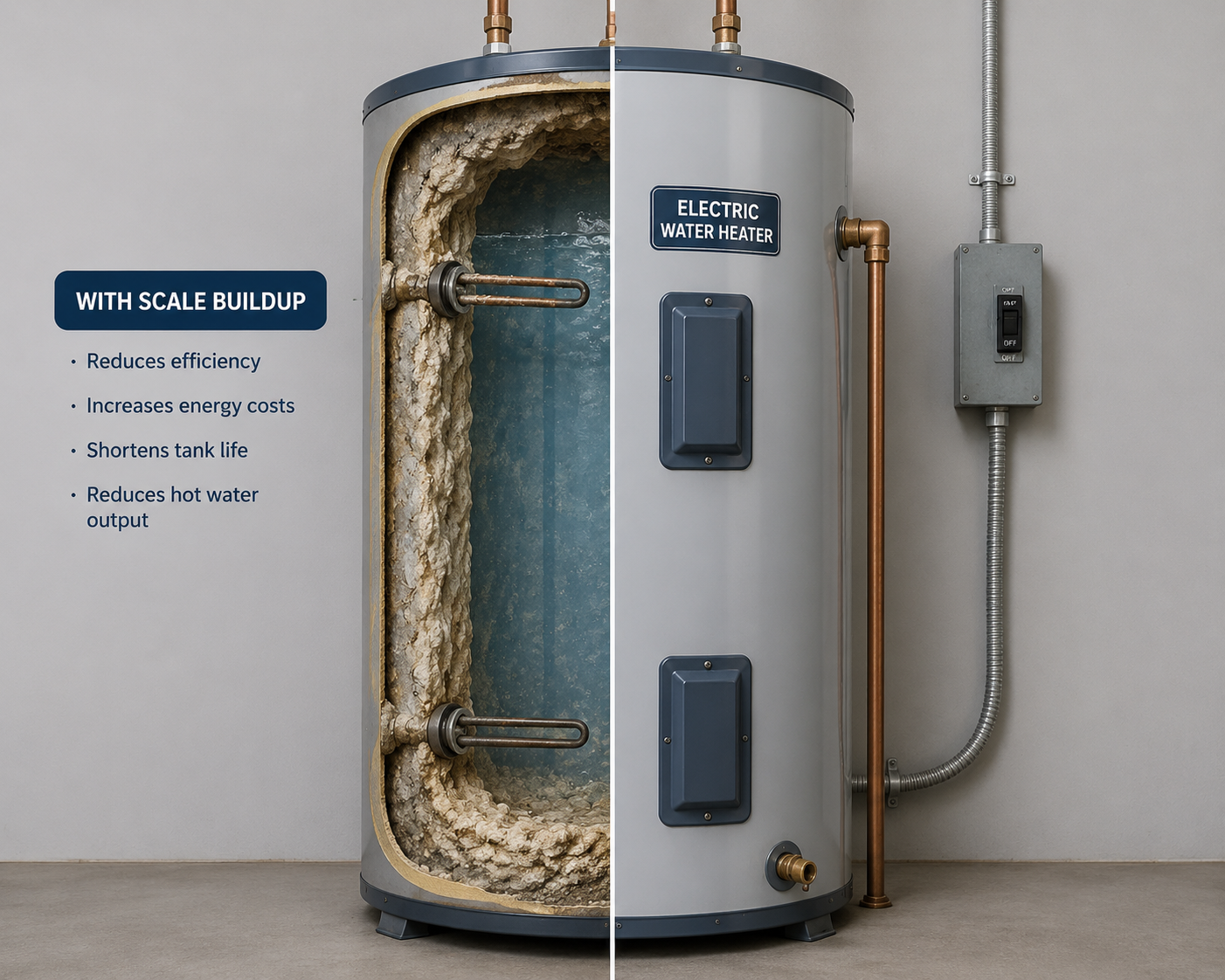
When hard water is heated, the dissolved calcium and magnesium minerals precipitate out of the water and form scale deposits on the heating element and the bottom of the tank. This scale acts as an insulating layer between the heat source and the water — and insulation that keeps heat away from the water is exactly what you don't want in a water heater.
The numbers are significant. Research has shown that just a quarter inch of scale buildup on a water heater's heating element can reduce its efficiency by as much as 40 percent. That means your water heater is burning 40 percent more energy — gas or electric — to deliver the same amount of hot water it used to produce easily.
In Florida, where hard water is the norm and water heaters work year-round without any seasonal relief, that efficiency loss compounds quickly. A water heater that's been running in an untreated hard water home for several years can be dramatically less efficient than it was when it was new — and your electric or gas bill reflects that every single month.
Tankless Water Heaters Aren't Immune
Many homeowners switch to tankless water heaters specifically because of their energy efficiency. And tankless units are more efficient — under the right conditions. But hard water scale affects tankless heaters too, and in some ways more severely.
Tankless water heaters have narrow internal heat exchanger passages that scale can clog relatively quickly. As those passages narrow with mineral buildup, the unit has to work harder to heat water flowing through reduced channels. Efficiency drops, energy use climbs, and the unit can eventually fail prematurely — voiding the warranty in many cases.
Manufacturers of most major tankless water heater brands recommend treating hard water before it enters the unit. The energy efficiency you paid a premium for disappears when scale is allowed to accumulate unchecked.
Your Dishwasher and Washing Machine
Your dishwasher and washing machine also use heated water — and both suffer the same scale accumulation problem as your water heater, just on a smaller scale.
The heating element in your dishwasher accumulates mineral deposits over time, reducing its ability to heat water efficiently. Your dishwasher runs longer cycles or struggles to reach proper wash temperatures, consuming more energy in the process.
Your washing machine — particularly if it uses hot water cycles — faces the same issue. Beyond the heating element, scale buildup on internal components causes the machine to work harder overall, drawing more power and wearing out faster.
Air Conditioning and Hard Water — An Indirect Connection
Here's one that surprises most people: hard water can indirectly affect your air conditioning costs in Florida.
Many Florida homes use water in their HVAC systems — either in humidifiers connected to the system, or in certain types of cooling equipment. But the more common indirect connection is through your home's overall plumbing efficiency.
More directly relevant: if you have a pool heat pump or any water-cooled equipment, scale buildup in those systems reduces their efficiency and increases energy consumption in the same way it affects your water heater.
The Laundry Energy Cost You Haven't Considered
Hard water forces you to use more detergent, wash at higher temperatures to get clothes clean, and sometimes run extra cycles when results aren't satisfactory. All of those responses to hard water's poor cleaning performance consume more energy.
Washing clothes in cold water works well with softened water — detergent lathers and works effectively at lower temperatures. With hard water, many people find they need warmer water to get satisfactory cleaning results, which means more energy per load.
Multiply that across hundreds of loads of laundry per year and the energy difference becomes meaningful.
Calculating What Hard Water Is Actually Costing You
The scale-on-heating-element efficiency loss is the most quantifiable cost. Here's a simple way to think about it:
If your water heating costs you $50 a month and scale buildup has reduced your water heater's efficiency by 30 percent, you're spending roughly $15 a month more than you should be — $180 a year — just on water heating. In a home with very hard water and an older water heater that's been accumulating scale for years, the efficiency loss can be even greater.
Add the reduced efficiency of your dishwasher, washing machine, and any other water-using appliances, and the total annual energy cost of untreated hard water in a Florida home can easily reach several hundred dollars per year.
What a Water Softener Does for Your Energy Bills
When softened water flows through your home, scale cannot form — because the minerals that cause scale have been removed before the water reaches any of your appliances.
Without scale accumulating on heating elements:
- Your water heater operates at its designed efficiency — you're paying for hot water, not for fighting scale insulation
- Your tankless water heater maintains its energy advantage — the efficiency you paid for is the efficiency you get
- Your dishwasher heats water efficiently and completes cycles properly without working overtime
- Your washing machine operates as designed without scale-related strain
Studies by the Water Quality Research Foundation have found that water softeners can save households hundreds of dollars annually in energy costs — enough in many cases to offset a significant portion of the softener's operating cost in salt and water.
The Appliance Replacement Cost Factor
Energy efficiency is the most direct financial connection between hard water and your bills, but there's a broader cost picture worth mentioning.
Appliances damaged by scale buildup fail earlier than they should. A water heater that should last 12 to 15 years might fail in 7 or 8. A tankless unit might need replacement a decade ahead of schedule. A dishwasher or washing machine replaced years early represents hundreds or thousands of dollars in premature costs.
When you factor in the energy savings, the extended appliance lifespan, the reduced detergent use, and the protection of your plumbing, a water softener's return on investment for a Florida home becomes very clear.
The Bottom Line
Hard water is costing you money on your energy bills every single month — quietly, invisibly, and consistently. The scale building up on your water heater's heating element right now is making that appliance work harder and use more energy than it should. The same is true for your dishwasher, your washing machine, and any other water-using appliance in your home.
In Florida, where hard water is nearly universal and appliances run year-round, the financial impact of untreated hard water is one of the most compelling reasons to address your water quality — beyond the staining, the skin issues, and the cleaning frustrations.
A water softener doesn't just make your water better. It makes your home more efficient and your appliances last longer. That's a return on investment that shows up on your utility bill every single month.
Want to find out how much hard water may be costing you? Dependable Water Treatment offers water testing and water softener installation throughout Florida. Contact us to learn what the right system could save you.
Meta Description: Hard water scale buildup forces your water heater and appliances to use more energy. Learn how Florida's hard water raises your electric bill and what to do about it.