The pipes running through your new home are easy to forget about since most of them are hidden inside walls and under floors. But the material your plumbing is made of tells you a great deal about what risks to watch for, and knowing what you are working with helps you interpret water quality issues correctly when they show up.
Copper Pipes
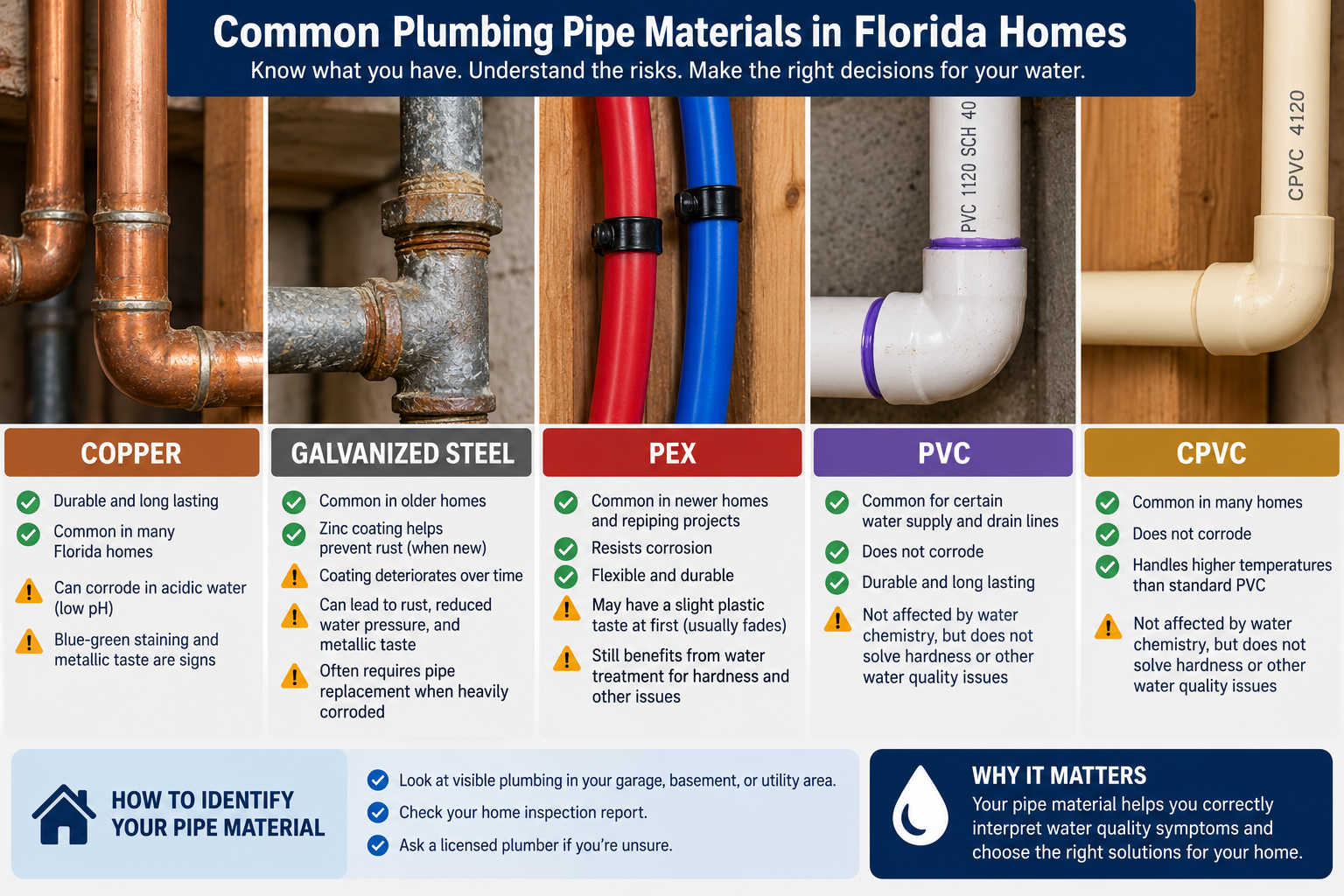
Copper has been a standard plumbing material in Florida homes for decades and is generally durable and long lasting. However, as covered in our article on why water pH matters for your home, copper is vulnerable to corrosion in acidic water. If your home has copper plumbing, blue-green staining in sinks and tubs, or a metallic taste in your water, are signs worth testing for low pH specifically, since copper corrosion is preventable with proper pH correction.
Galvanized Steel Pipes
Common in older homes, galvanized steel pipes have a zinc coating originally intended to prevent rust. Over decades, this coating deteriorates from the inside out, leading to internal corrosion, reduced water pressure from mineral and rust buildup inside the pipe, and sometimes a metallic taste from zinc leaching into the water. If your home has galvanized plumbing, understand that pipe replacement, rather than water treatment alone, is often the most effective long term solution once significant internal corrosion has occurred.
PEX (Cross Linked Polyethylene) Piping
PEX has become increasingly common in newer Florida construction and in repiping projects. It resists the corrosion issues that affect copper and galvanized steel, since it is a plastic material rather than metal. Some homeowners notice a slight plastic taste in the first weeks after installation, which typically fades with normal use. PEX is generally considered low risk from a water chemistry standpoint, though it still benefits from water treatment to protect fixtures and appliances from hardness and other issues unrelated to the pipe material itself.
PVC and CPVC Piping
Also plastic based, PVC and CPVC piping share many of the same low corrosion characteristics as PEX. These materials are common for certain plumbing applications, particularly in some water supply lines and drain systems. Like PEX, they do not corrode the way metal pipes do, but they also do not protect against hardness, iron, or other water quality issues originating from the source water itself.
How to Identify Your Home's Pipe Material
Visible plumbing in a garage, basement, or utility area often gives you a direct look at your home's pipe material. Copper is reddish orange and typically rigid. Galvanized steel is dull gray and often shows visible rust or corrosion at joints in older installations. PEX is usually flexible and colored red, blue, or white. PVC and CPVC are rigid and typically white, gray, or cream colored. If your plumbing is not visible, your home inspection report or a licensed plumber can typically identify the material without difficulty.
Why This Matters for Your Water Treatment Decisions
Knowing your pipe material helps you correctly interpret certain symptoms. Blue-green staining points toward copper corrosion and acidic water rather than a hardness issue. A metallic taste combined with galvanized piping points toward the pipe material itself rather than something in your source water. This context helps ensure you and any water treatment professional you work with are addressing the actual cause rather than treating the wrong problem.
The Bottom Line
Your home's pipe material shapes what water quality risks are most relevant to your specific situation. Taking a few minutes to identify what you have, whether through direct observation or your inspection report, gives you useful context for interpreting any water quality symptoms that show up after you move in.
Dependable Water Treatment helps Florida homeowners understand how their plumbing material interacts with their water quality. Contact us to schedule a comprehensive water test.