Between unpacking boxes, setting up utilities, and learning the layout of a new house, water quality is rarely the first thing on a new homeowner's mind. But a handful of simple checks in your first few days can save you significant time, money, and frustration down the road — helping you understand what you're working with before small issues become bigger ones.
Locate Your Main Water Shutoff
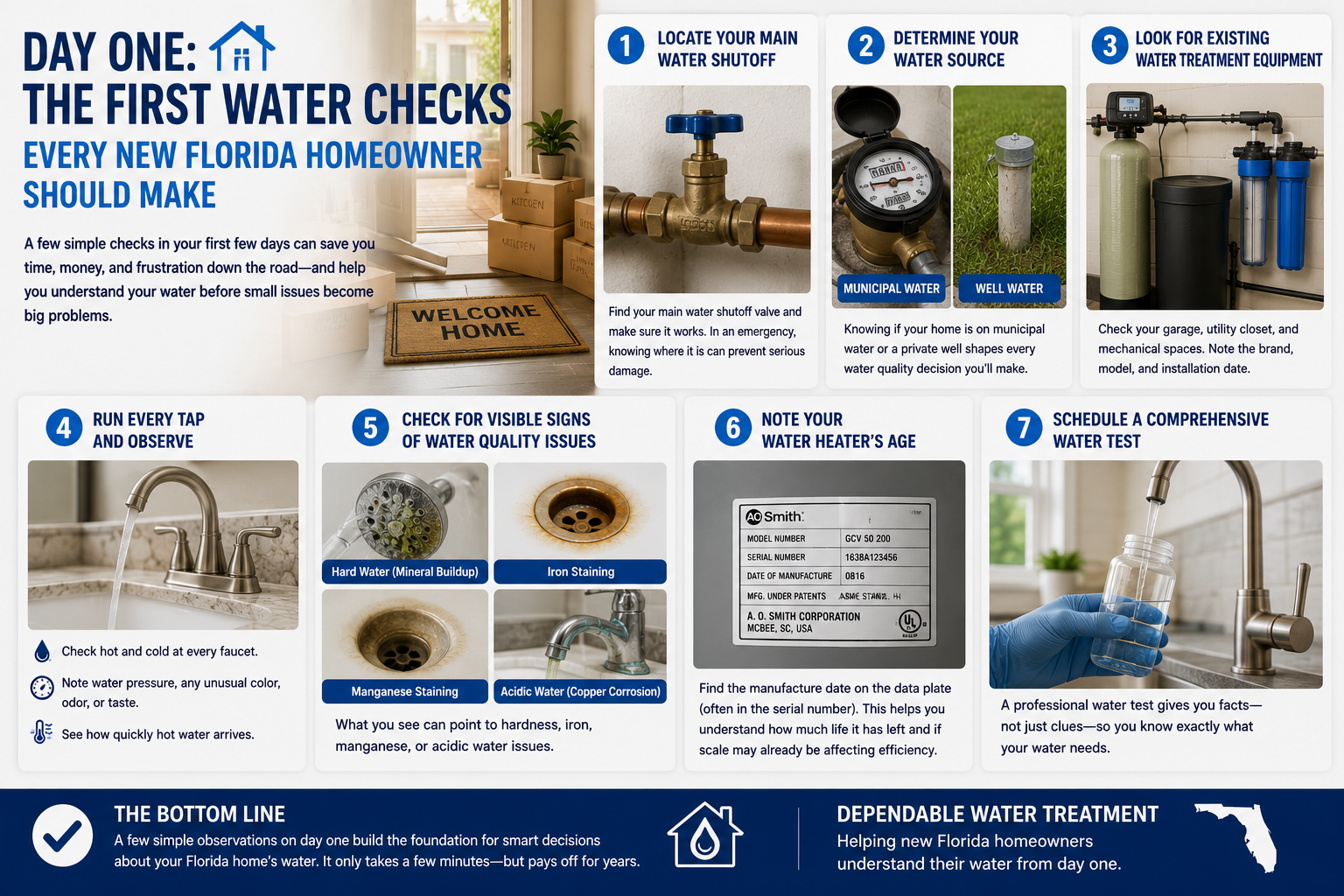
Before anything else, find your home's main water shutoff valve. In an emergency — a burst pipe, a major leak — knowing exactly where this is and confirming it actually works is far more valuable discovered on day one than during a flooding emergency at 11pm. For Florida homes, this is typically located where the water line enters the house, often near the water meter at the street, or inside a utility closet or garage.
Determine Your Water Source
Confirm whether your new home is on municipal water or a private well — this single fact determines almost everything else about how you'll approach water quality going forward. If you're not certain, your closing documents, a utility bill, or a simple look at your property for a wellhead (a pipe casing sticking up from the ground, often near the house) will tell you. As covered in our article on how to find out if your new home is on well or municipal water, this distinction shapes every water quality decision that follows.
Look for Existing Water Treatment Equipment
Walk through your garage, utility closet, and any mechanical spaces looking for a water softener, filtration system, or other treatment equipment. If you find something, note the brand, model, and any visible installation date — this becomes important for evaluating whether it's functioning and worth keeping, a topic covered in detail in our article on how to evaluate an inherited water softener.
Run Every Tap and Observe
Spend a few minutes running water at every faucet in the house, checking hot and cold at each one. Note the water pressure, any unusual color, odor, or taste, and how quickly hot water arrives. This baseline observation — done before you've lived with the water long enough to become used to it — often reveals issues that become invisible once you've adjusted to them over time.
Check for Visible Signs of Hard Water or Staining
Look at toilet bowls, sink basins, showerheads, and faucet fixtures for white mineral buildup, orange or black staining, or blue-green discoloration. Each of these visual signs points toward specific water quality issues — hardness, iron or manganese, or acidic water corroding copper — that are worth investigating further with a proper test.
Note Your Water Heater's Age
Most water heaters have a manufacture date on their data plate, often encoded in the serial number. Knowing your water heater's age helps you understand how much life it likely has left, and whether existing scale buildup from years of untreated hard water might already be affecting its efficiency, a topic covered in our article on what your water heater's age means for your water quality.
Schedule a Comprehensive Water Test
All of the observational checks above give you clues, but a proper water test gives you facts. As covered in our article on why every new Florida homeowner should test their water in the first 30 days, this is the single most valuable step you can take to understand what you're actually dealing with, regardless of what your walkthrough observations suggest.
The Bottom Line
A handful of simple observations in your first days as a Florida homeowner — locating your shutoff, identifying your water source, checking for existing equipment, and looking for visible signs of water quality issues — builds the foundation for informed decisions about your home's water going forward. None of this requires professional help, just a few minutes of attention amid the chaos of moving in.
Dependable Water Treatment helps new Florida homeowners understand exactly what their water needs from day one. Contact us to schedule a comprehensive water test.