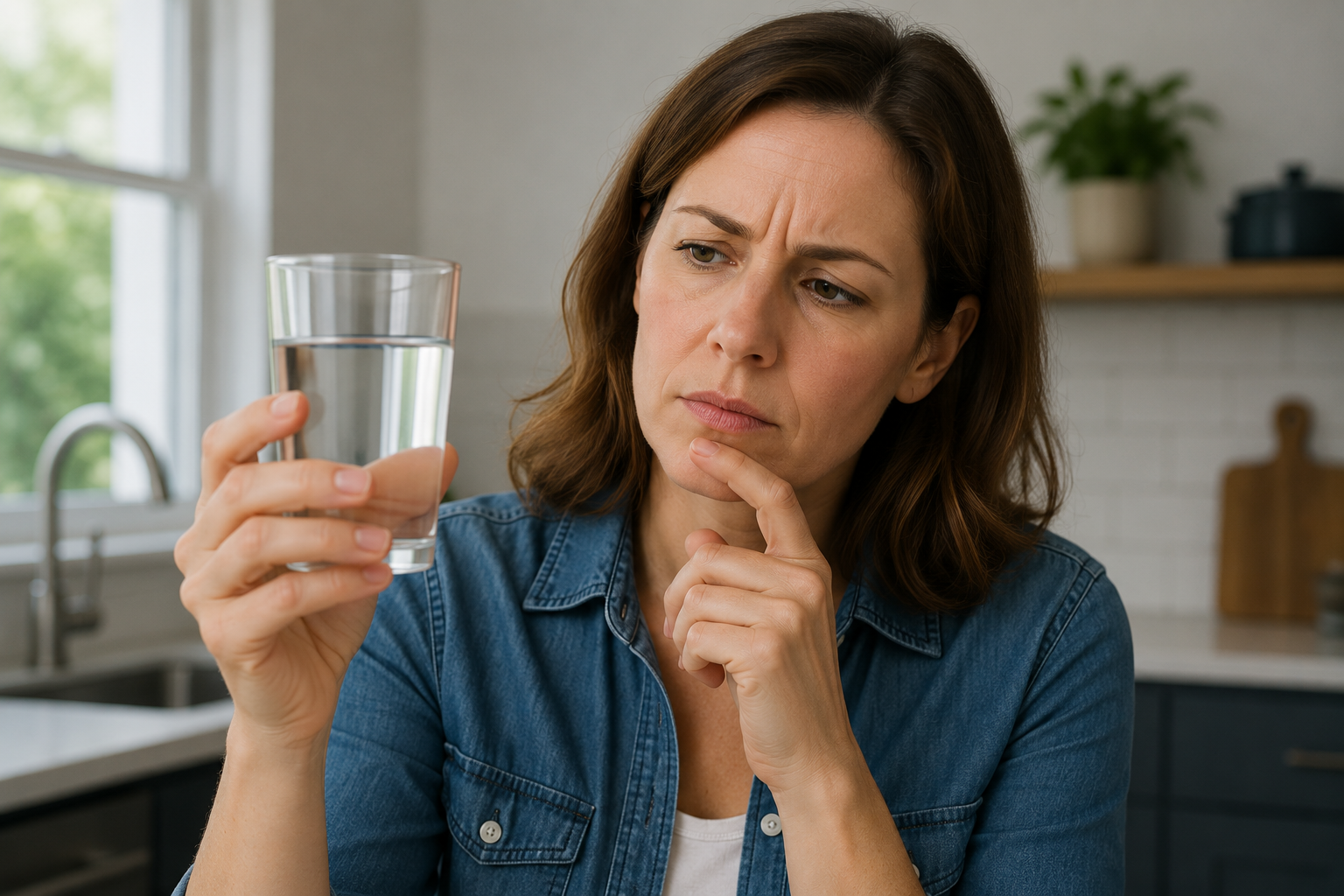
It's one of the most common questions people ask when they're considering a water softener — and it's a completely reasonable one. You're about to install a system that changes the chemistry of every drop of water in your home. You want to know if that water is safe to drink afterward.
The short answer is: a water softener does not make water unsafe to drink, but it also doesn't make water comprehensively safe to drink either. It does one specific thing very well, and understanding what that is — and what it isn't — will help you make the right decisions about your home's water treatment setup.
What a Water Softener Actually Does to Your Water
A water softener removes calcium and magnesium from your water through a process called ion exchange. As hard water passes through the resin tank, calcium and magnesium ions are attracted to and held by the resin beads, and sodium ions are released into the water in their place.
The result is water with dramatically reduced hardness — water that won't scale your pipes, damage your appliances, or leave mineral deposits on your fixtures and dishes.
What a water softener does not do is remove bacteria, viruses, heavy metals, nitrates, chlorine, chloramines, volatile organic compounds, pharmaceuticals, or most other chemical contaminants. It is a hardness removal system — not a purification system.
Is Softened Water Safe to Drink?
For the vast majority of healthy adults, yes — softened water is safe to drink. The sodium added to the water during the ion exchange process is generally at levels well within what health authorities consider acceptable for most people.
To put the sodium level in perspective: the amount of sodium added to softened water depends on how hard the original water was. Softening water with a hardness of 20 grains per gallon adds approximately 150 to 300 milligrams of sodium per liter of water. For comparison, a single slice of white bread contains around 150 milligrams of sodium, and a cup of milk contains about 100 milligrams.
For healthy adults without sodium restrictions, the sodium in softened water is not a meaningful health concern.
Who Should Be Cautious About Drinking Softened Water
While softened water is safe for most people, there are specific groups who should be aware of the added sodium:
People on medically restricted low-sodium diets. If your doctor has placed you on a strict low-sodium diet due to heart disease, hypertension, kidney disease, or other conditions, the sodium in softened water is worth discussing with your physician. Depending on your hardness level and how much water you drink, it may be a factor worth addressing — typically by using an under-sink reverse osmosis system for drinking water, which removes the sodium along with other dissolved solids.
Infants. Formula prepared with softened water delivers additional sodium to infants, whose kidneys are not fully developed and who are more sensitive to sodium intake. Parents preparing infant formula should use unsoftened water or reverse osmosis water rather than softened water directly from the tap.
People with kidney disease. Sodium processing is a concern for individuals with compromised kidney function. If kidney disease is a factor, consult your physician about whether softened water is appropriate for drinking.
Does a Water Softener Remove Contaminants?
This is where the distinction between softening and purification becomes important.
A water softener is not designed to remove — and does not effectively remove — the following:
- Bacteria and viruses. If your well water has bacterial contamination, a softener will not address it. You need UV disinfection or chemical treatment for biological contaminants.
- Heavy metals. Lead, arsenic, mercury, and other heavy metals are not removed by ion exchange softening.
- Nitrates. Common in agricultural areas of Florida, nitrates are not removed by a water softener.
- Chlorine and chloramines. The disinfectants used in municipal water treatment pass through a softener unchanged. A carbon filter is needed to address these.
- Iron (in high concentrations). While a softener can remove low levels of dissolved iron, it is not the right primary treatment for significant iron problems.
- Sulfur/hydrogen sulfide. The rotten egg odor from sulfur water is not addressed by a water softener.
- Volatile organic compounds (VOCs). Chemical contaminants from industrial or agricultural sources require carbon filtration or reverse osmosis to remove.
- PFAS (forever chemicals). These increasingly common contaminants require reverse osmosis or specialized filtration — not a softener.
If your water has any of these issues in addition to hardness, a softener alone is not sufficient. This is why a comprehensive water test is so important before designing a treatment system.
The Right Way to Think About Water Softeners and Drinking Water
A water softener is best understood as one layer of a complete water treatment approach — not a standalone solution for all water quality concerns.
In most Florida homes, the ideal setup looks something like this:
Whole-house water softener — removes hardness, protects plumbing and appliances, improves laundry, dishes, skin, and hair throughout the entire home.
Whole-house carbon filter — removes chlorine, chloramines, and other chemical contaminants from all the water in the home (particularly important for municipal water users).
Under-sink reverse osmosis system — provides highly purified water specifically for drinking and cooking at the kitchen tap. RO removes sodium added by the softener, along with nitrates, heavy metals, PFAS, and a broad range of other contaminants. This is the gold standard for drinking water quality.
With this combination, every drop of water entering your home is softened and filtered, and your drinking and cooking water goes through an additional purification stage that addresses virtually everything a softener and carbon filter leave behind.
What About the Taste of Softened Water?
Some people notice a slightly different taste in softened water — particularly if they're accustomed to the taste of very hard water. The mineral taste that hard water has comes largely from the calcium and magnesium that the softener removes. Softened water tastes cleaner and smoother to most people, though some describe it as slightly flat compared to mineral-rich hard water.
If you're on municipal water, softened water that's also been through a carbon filter tastes significantly better than straight tap water — free of the chlorine or chloramine chemical taste that municipal water often carries.
For the cleanest, best-tasting drinking water, reverse osmosis remains the gold standard — and it pairs perfectly with a whole-house softener as part of a complete system.
Can You Use a Bypass for the Kitchen Cold Tap?
Some homeowners choose to install a bypass on the cold water line to the kitchen sink, so that one tap delivers unsoftened water for drinking while the rest of the house gets softened water. This is technically possible and is sometimes done when sodium in drinking water is a specific concern.
However, most water treatment professionals recommend against this approach for a few reasons. Unsoftened water at the kitchen tap still contains whatever contaminants were in the source water — hardness, chlorine, iron, or others. And it creates a situation where the kitchen cold line is doing double duty and the hardness-related benefits (kettle scale, coffee taste, ice maker protection) are lost at the most-used tap in the house.
A better solution for drinking water quality is an under-sink RO system, which provides purified water at a dedicated tap without compromising the whole-house softening benefits.
The Bottom Line
A water softener makes your water better in very specific and meaningful ways — it removes hardness, protects your home, and improves your daily experience of water in dozens of ways. But it is not a water purifier, and it is not a replacement for drinking water treatment.
Softened water is safe to drink for most healthy adults. People with specific health concerns — particularly sodium restrictions, kidney disease, or infants in the home — should discuss their drinking water with their physician and consider an under-sink RO system as part of their water treatment setup.
The best approach is to think of your water treatment system in layers: softening for the whole house, and reverse osmosis for the water you actually drink and cook with. Together, they address the full range of water quality concerns that Florida homeowners face.
Dependable Water Treatment designs complete water treatment systems for Florida homes — from whole-house softeners to under-sink reverse osmosis. Contact us to find out what your water needs and build the right solution for your household.