Iron is one of the most common water problems in Central Florida, and it is also one of the easiest to treat the wrong way. Rust colored stains, orange buildup in toilets, metallic tasting water, and laundry that comes out yellowed all point to iron, but the equipment that fixes it depends on what form the iron is in and what else is in the water. Choosing between an air injection filter, a catalytic media filter, and a chemical feed system is less about which one is best and more about which one matches your water.
Start by Knowing What Kind of Iron You Have
Iron shows up in water in a few different forms, and they behave differently. Dissolved iron, often called clear water iron, looks fine when it comes out of the tap but turns orange or brown after the water sits or hits air. Particulate iron is already oxidized and shows up as rusty color or visible particles the moment you open the faucet. Iron can also be bound up with organic material, which makes it harder to remove, and some wells carry iron bacteria, which create a slimy orange or reddish growth and often bring a musty or swampy smell with them. Our article on black specks and flakes in well water explains how some of these problems show up in the home.
A proper water test tells you how much iron is present and whether other factors, such as pH, hardness, manganese, and hydrogen sulfide, are in play. Those other numbers matter just as much as the iron reading, because the best method for one water chemistry can perform poorly in another. We cover what a good test includes in our article on what a professional water test measures.
Water Softeners Are Not Iron Filters
It is tempting to rely on a softener for iron, and a softener can handle small amounts of dissolved iron under the right conditions. But once iron rises above what the resin can manage, it begins to coat and foul the beads, and the softener loses capacity. It is usually better to remove iron before the water reaches the softener and let the softener focus on hardness.
Air Injection Oxidizing Filters
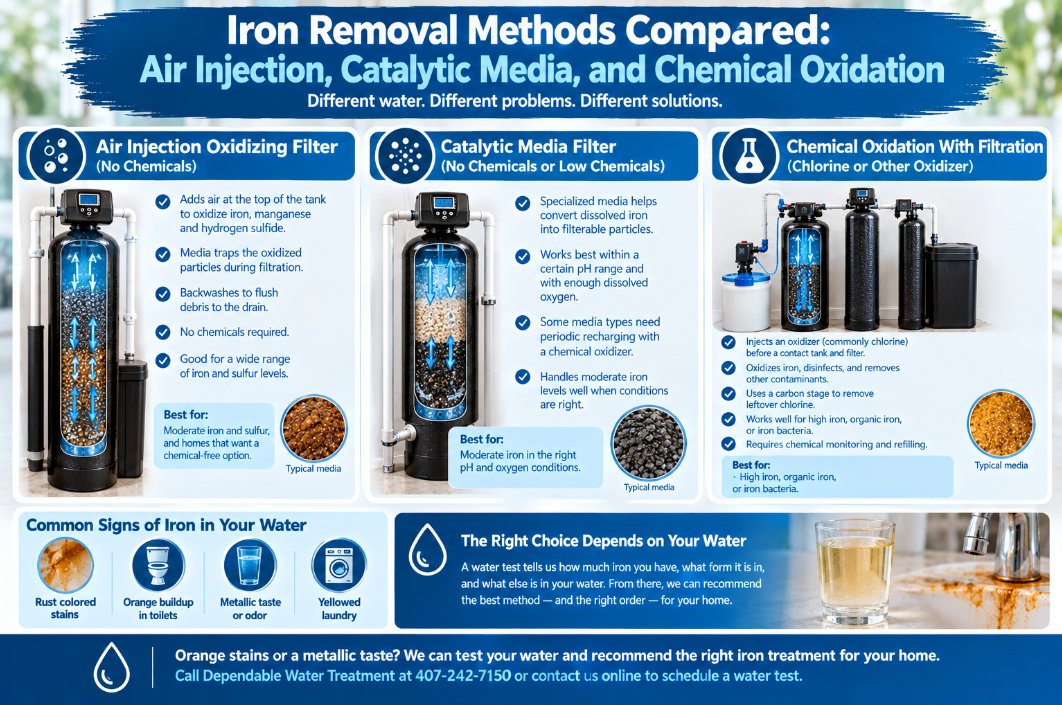
An air injection filter works by adding a pocket of air at the top of the tank. As water passes through, the oxygen oxidizes dissolved iron, manganese, and hydrogen sulfide into particles that the media then traps. Periodically, the system backwashes to flush the captured material to the drain and re-forms the air pocket. These filters use no chemicals, which is a major reason homeowners like them, and they handle a wide range of iron levels and also reduce sulfur odor, which makes them a common choice for Florida wells.
The tradeoffs are worth knowing. They need enough water flow for an effective backwash, they produce some wastewater during that backwash, and the air system has parts that need occasional attention. They work best when sized and set up for the specific iron and sulfur levels in the water.
Catalytic and Oxidizing Media Filters
Another approach uses specialized media that helps convert dissolved iron into filterable particles as water passes through. Different media types have different strengths. Some work best within a particular pH range and need enough oxygen already dissolved in the water to do their job. Others tolerate a wider range of conditions and higher flow rates. Some older style media need to be periodically recharged with a chemical oxidizer, which adds a maintenance step.
Because the performance of each media depends on pH, dissolved oxygen, and what else is in the water, a media that works well at one home can disappoint at the next. This is a common reason an iron filter that worked for a neighbor does not work for you, and it is why testing before choosing matters so much.
Chemical Oxidation With Filtration
A chemical feed system injects an oxidizer, commonly chlorine, into the water ahead of a contact tank and filter. This is a strong option for high iron levels, iron bacteria, or stubborn organic iron, because the oxidizer disinfects as well as oxidizes. After the filter, a carbon stage usually removes the leftover chlorine. The tradeoff is that the system has a chemical to monitor and replenish, which adds ongoing maintenance, and it requires careful setup to keep levels correct.
How the Choice Gets Made
No single method is the right answer for every home. Moderate iron with some sulfur often points to air injection. Iron in the right pH and oxygen conditions may do well with a catalytic media filter. Very high iron, organic iron, or iron bacteria may call for chemical oxidation. Where iron is only one of several problems, it becomes one stage in a larger system, and the order of those stages matters as much as the choice of equipment. We walk through that decision process in our article on how to determine what water treatment your home needs, and our article on why some Florida homes need both a softener and a carbon filter explains how iron treatment fits alongside other equipment.
Seeing orange stains or tasting metal in your water? We can test it and recommend the right iron treatment for your home. Call Dependable Water Treatment at 407-242-7150 or contact us online to schedule a water test.