If you've ever stepped out of a shower with softened water for the first time and immediately thought something felt "off" — slippery, filmy, like you couldn't quite rinse the soap away — you're not imagining the sensation. But you are misinterpreting what's actually happening. This is one of the most common and persistent myths about water softeners, and it stops a lot of people from making a switch that would genuinely improve their daily life.
Let's clear up what's really going on.
The Myth
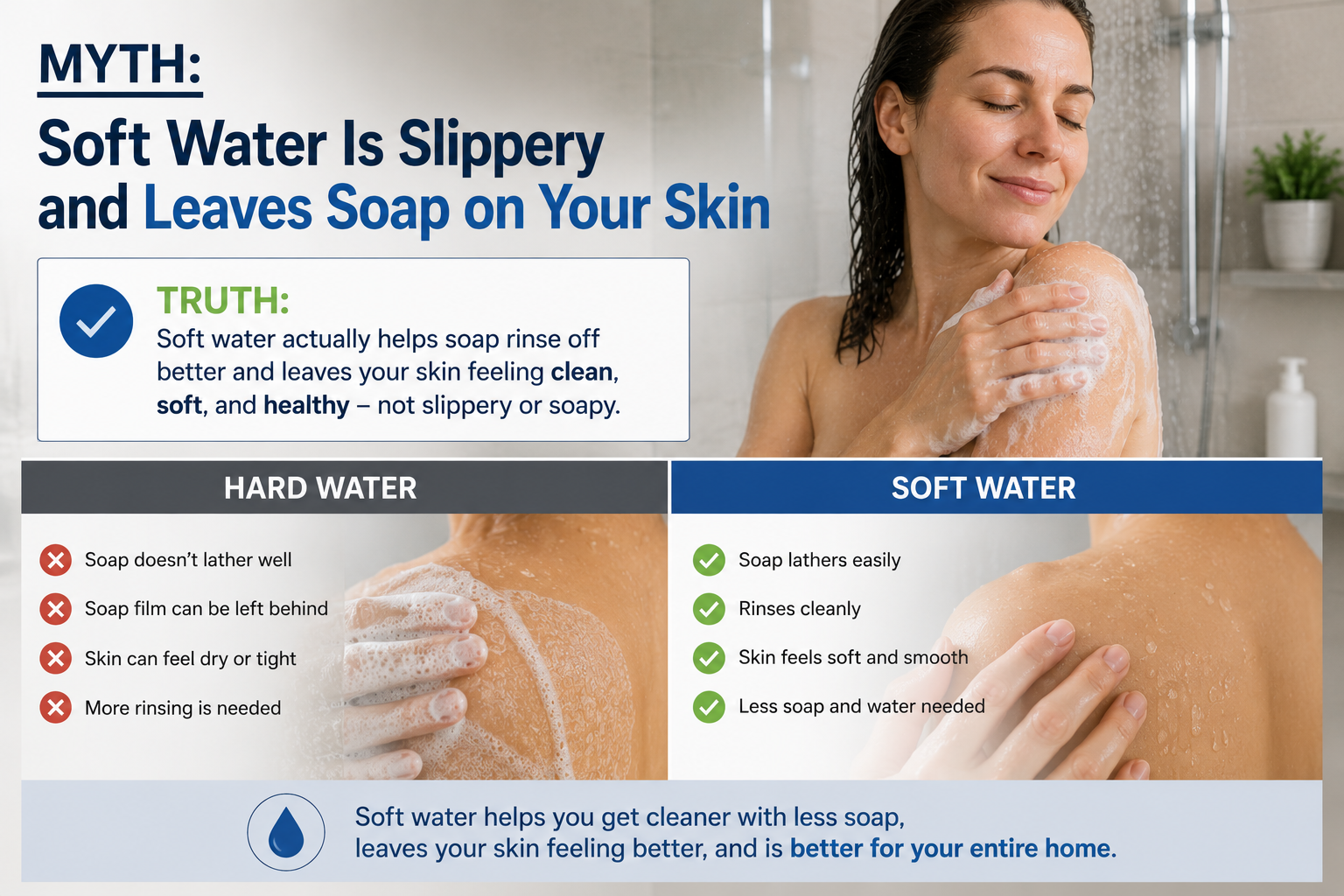
The claim goes like this: softened water feels slippery on your skin, and that slippery feeling means soap residue is being left behind — that you're not getting properly rinsed, and you're walking around all day with a film of soap on your body.
It sounds reasonable on the surface. Slippery feels like "not rinsed." But the science of what's actually happening tells a very different story.
What's Actually Happening: It's the Opposite
Here's the part that surprises most people: that slippery feeling is a sign that soap is rinsing away completely — not that it's being left behind.
In hard water, soap reacts with dissolved calcium and magnesium to form a substance called soap scum — the same chalky residue you see building up in your bathtub and on your shower walls. That soap scum doesn't fully rinse away. It clings to your skin in a thin film, and that film is what creates the sensation most people associate with feeling "clean" after a shower — a slightly tight, squeaky feeling on the skin.
That squeaky feeling isn't actually cleanliness. It's mineral residue and unrinsed soap sitting on your skin.
In soft water, there's no calcium or magnesium to react with the soap. The soap does its job — lifting away dirt and oil — and then rinses away completely and easily, because there's nothing left for it to bond with. What you're left with is your actual clean skin, with its natural oils intact, rather than a layer of soap scum.
The slippery feeling is your skin in its natural state, with the soap properly removed and natural oils preserved — not residue.
Why This Feels Counterintuitive
Most of us grow up associating a squeaky, tight feeling after washing with "clean." It's the sensation we've experienced our whole lives, especially anyone who has lived primarily in a hard water area. So when that feeling disappears, our brain interprets the absence of the familiar sensation as something being wrong — even though what's actually happening is an improvement.
It's similar to how teeth feel after a dental cleaning — unusually smooth, almost slippery to your tongue. That sensation isn't a problem. It's your teeth without the buildup you'd become used to.
What the Research Actually Shows
Dermatological research on hard water versus soft water consistently points in one direction: hard water is harder on skin, not softer. The mineral residue left by hard water can disrupt the skin's natural moisture barrier, contributing to dryness, irritation, and exacerbation of conditions like eczema. Soft water, by allowing cleansing products to rinse away completely, helps preserve the skin's natural protective oils.
People with eczema, psoriasis, or generally sensitive skin frequently report improvement after switching to softened water — not because the water leaves something behind, but because it removes everything it's supposed to remove, including the soap itself, without leaving mineral residue in its place.
What You Can Do If the Sensation Bothers You
If you've switched to softened water and the new sensation feels strange, here are a few things that can help with the adjustment period:
Give it time. Most people adjust to the feeling of soft water within a couple of weeks. The "squeaky clean" expectation fades as your skin and your brain recalibrate to what genuinely clean skin feels like.
Use less soap. Soft water requires significantly less soap and shampoo to produce a rich lather and effective cleaning. Many people continue using the same amount of product they used with hard water, which can actually leave more product on the skin simply because there's more of it to begin with. Cutting back on the amount you use often resolves any lingering film sensation.
Rinse thoroughly regardless. Good rinsing habits matter in any water type. If you're concerned about residue, take a few extra seconds at the end of your shower to ensure thorough rinsing — though with soft water, you'll find this takes less effort than it did before.
The Bigger Picture
This myth matters because it's one of the most common objections people raise when considering a water softener — and it's based on a misunderstanding of what's actually happening on their skin. The slippery feeling that makes some people hesitant is, in reality, one of the clearest signs that the system is working exactly as intended.
Softened water doesn't leave anything behind. It takes away the mineral interference that was preventing your soap from doing its job — and what you feel afterward is the result of soap and water finally working the way they're supposed to.
The Bottom Line
Soft water feeling slippery isn't a flaw — it's the absence of the soap scum and mineral residue that hard water leaves behind. That clean, slick feeling is closer to what genuinely clean, well-moisturized skin actually feels like. The squeaky-tight sensation that hard water produces is the residue talking, not your skin.
Once you understand the difference, the sensation stops feeling like a problem and starts feeling like exactly what it is: water and soap finally doing their job completely.
Curious what softened water would actually feel like in your home? Dependable Water Treatment installs water softeners throughout Florida and is happy to answer any questions about what to expect. Contact us to learn more.