A reverse osmosis system is one of the most effective ways to improve the water you drink, and it is also one of the easiest systems to forget about. The water keeps coming out of the faucet, so most people assume it is still doing its job. Meanwhile the membrane inside is slowly wearing, and a few simple habits and measurements can tell you whether your system is performing as it should or quietly slipping. Understanding how the membrane works, why the first glass of the morning can taste different, and how to tell when it is time to replace it helps you get the most out of your RO.
What the Membrane Actually Does
The heart of an RO system is a semipermeable membrane with extremely small pores. Under pressure, water molecules are pushed through while most dissolved solids, such as salts, minerals, and many other contaminants, are held back and flushed to the drain. We explain the full process in our article on how reverse osmosis purifies your water. The membrane does not work alone. Sediment and carbon pre-filters sit ahead of it to protect it, and a post-filter polishes the water on the way to the faucet.
Understanding Rejection Rates
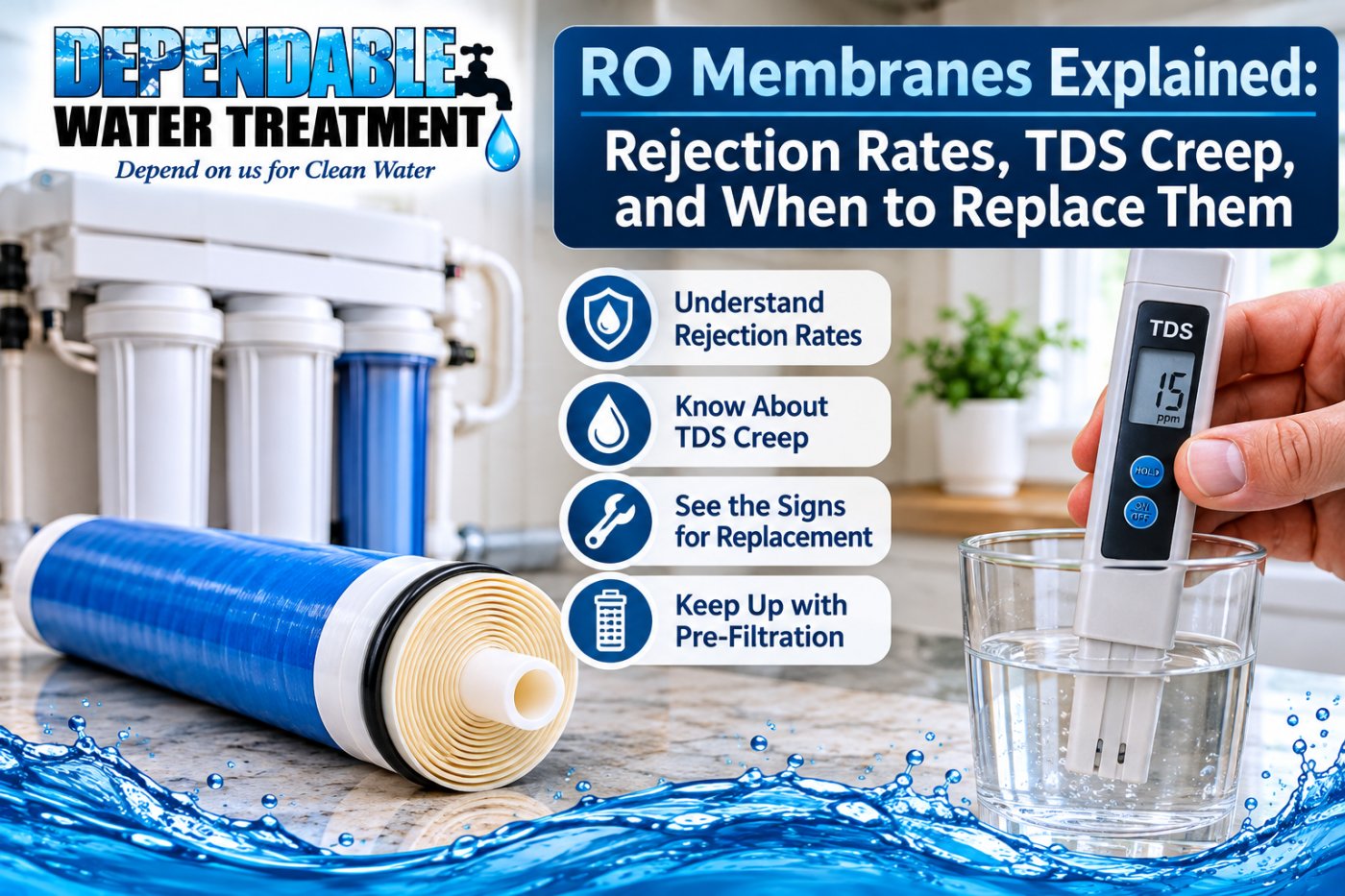
The performance of an RO membrane is usually described by its rejection rate, which is the percentage of dissolved solids it keeps out of your drinking water. A healthy residential membrane commonly rejects the large majority of total dissolved solids, often in the range of 90 percent or more under good operating conditions. That number is not fixed. It depends on the quality of the water feeding the system, the water pressure, the temperature, and the condition of the membrane itself.
You can measure it with a simple handheld TDS meter. Test the water coming into the system and the water coming out of the RO faucet, then compare. If the incoming water reads 300 and the RO water reads 15, the membrane is rejecting about 95 percent. If that gap narrows over time, the membrane is losing effectiveness. A TDS meter is not a substitute for a full water test, because it measures total dissolved solids and not specific contaminants, but it is a useful way to track the membrane over time. For a complete picture, a lab level test is described in our article on what a professional water test measures.
TDS Creep: Why the First Glass Can Taste Different
If you have ever noticed that the first water from your RO faucet after it has been sitting unused tastes slightly off, you may have run into a phenomenon known as TDS creep. When an RO system is not actively producing water, there is no pressure pushing water across the membrane. During that time, dissolved solids from the feed side can slowly diffuse across the membrane into the product water sitting in the tank or lines. The result is that the first water you draw after a long period of inactivity can read higher on a TDS meter than water drawn later.
This is a normal behavior of RO systems rather than a sign of failure. The simple remedy is to let the faucet run for a few seconds after a long idle period, such as overnight, before you fill a glass. If the difference between the first draw and later draws is large, or if the elevated reading continues after you flush, the membrane or another component may need attention.
What Shortens a Membrane's Life
A membrane's lifespan depends heavily on what it is fed. Chlorine and chloramines are the biggest threat to the thin film composite membranes used in most home systems. These disinfectants damage the membrane material, which is why the carbon pre-filter matters so much. Once the carbon filter is exhausted, chlorine passes through and starts attacking the membrane. Hard water is another major factor, because scale can form on the membrane surface and block its pores. Sediment and iron can foul it as well. In Florida, where hardness and disinfectants are common, protecting the membrane is a big part of keeping an RO healthy. We discuss how carbon works in our article on how activated carbon removes contaminants, and how to expect components to age in our article on how long water treatment systems last.
Signs It May Be Time to Replace the Membrane
Membranes are typically replaced every few years, though the right interval depends on your water and how well the pre-filters are maintained. Signs that the membrane may be failing include a rejection rate that has dropped noticeably from when the system was new, water that tastes salty or flat, a much slower fill rate for the storage tank, or a system that runs constantly. Replacing pre-filters on schedule is the most effective thing you can do to extend membrane life, because a worn pre-filter is the usual reason a membrane fails early.
Not sure your RO is still doing its job? We can test the water and check your system. Call Dependable Water Treatment at 407-242-7150 or contact us online to schedule a water test.