If you split your time between Florida and another state, closing up your Florida home for several months at a time creates a unique set of water quality considerations that year-round residents don't have to think about. Water that sits stagnant in pipes, tanks, and fixtures for extended periods behaves differently than water that's flowing through your system daily — and understanding these differences helps you protect your home and come back to water that's safe and pleasant to use.
What Happens to Water That Sits Stagnant
Water quality isn't a static, one-time condition — it changes over time, particularly when water sits still rather than continuously flowing and being refreshed. Several things happen during extended stagnation that are worth understanding.
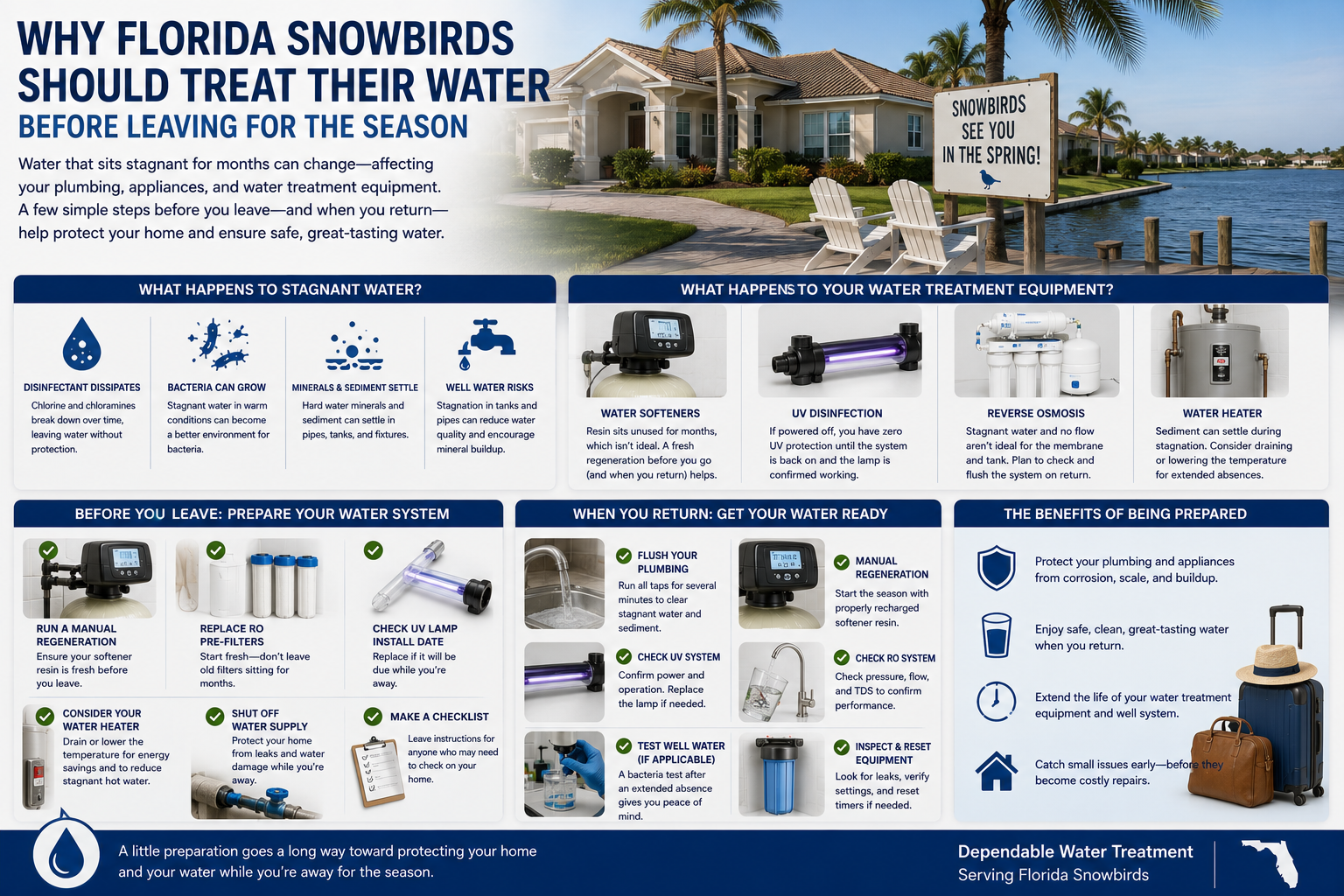
Chlorine and chloramine dissipation. For municipal water customers, the chlorine or chloramines that keep water disinfected during normal use gradually break down and dissipate over time when water sits stagnant in your home's plumbing. As covered in our article on what chloramine is and why it's in Florida water, chloramines are more persistent than chlorine, but even they diminish over weeks and months of stagnation, leaving water in your pipes without the disinfectant protection it had when it first entered your home.
Bacterial growth potential. Without the ongoing disinfectant protection and without fresh water flow to prevent buildup, stagnant water — particularly in warmer conditions, which describes most Florida homes for much of the year — can become a more favorable environment for bacterial growth within your plumbing system, including in fixtures, water heaters, and any water treatment equipment.
Mineral and sediment settling. In hard water systems, minerals that would normally be carried through the plumbing with regular flow can settle and concentrate in low-flow areas, water heaters, and fixture components during extended stagnation.
Well water considerations. For well water systems, stagnant water in the pressure tank and plumbing, combined with a well pump that isn't cycling regularly, can create similar conditions — reduced disinfection if any chemical treatment is used, and settling of iron, sediment, or other minerals that would normally be carried through with regular use.
What Happens to Your Water Treatment Equipment During Extended Absence
Water softeners. Left in normal service mode without any water use, a softener won't need to regenerate as frequently since regeneration is based on water usage in most modern systems, as covered in our article on how ion exchange water softening works. However, resin sitting completely unused for months, particularly in Florida's warm, humid conditions, isn't ideal for the biological environment inside the tank, and some water treatment professionals recommend a specific pre-departure or return regeneration cycle to address this.
UV disinfection systems. If your UV system is left powered off during your absence — either intentionally to save the lamp's rated hours, or because you've shut off the main water supply and don't want the system running dry — remember that when you return and restore water flow, you'll have zero UV protection until the system is confirmed operational again with a properly functioning lamp.
Reverse osmosis systems. RO membranes and the storage tank can be affected by extended periods without use. Stagnant water in the system, combined with no fresh water flow through the membrane, isn't ideal for long-term membrane health, and many manufacturers recommend either running a partial cycle periodically if someone is checking the home, or planning to change pre-filters and potentially flush or sanitize the system upon return, depending on how long the home was unoccupied.
Should You Shut Off Your Water Completely?
Many snowbirds choose to shut off their main water supply while away, primarily as protection against undetected leaks causing significant water damage during a long absence — a much more common and costly problem than water quality degradation from stagnation. This is generally sound practice from a property protection standpoint.
However, shutting off water completely means every fixture, every appliance connection, and your water treatment equipment all sit with whatever water was in them at the moment of shutoff, for the full duration of your absence — with zero flow, zero disinfectant refresh, and zero filtration occurring the entire time. This makes the water quality steps described below even more relevant upon your return, regardless of whether you shut water off completely or left it running with reduced or no usage.
What to Do Before You Leave
Run water treatment equipment through a fresh cycle. If practical, running your water softener through a manual regeneration cycle shortly before departure ensures you're leaving with freshly regenerated resin rather than resin that's been sitting since your last normal-use regeneration, which could have been days or weeks before departure depending on your household's usage pattern leading up to leaving.
Replace RO pre-filters if they're due soon. If your pre-filters would be due for replacement during your absence or shortly after your planned return, replacing them before you leave means your system starts fresh rather than sitting for months with filters at or near the end of their service life.
Note your UV lamp's installation date. If your UV lamp is approaching its annual replacement mark and your absence would push it past that mark, consider replacing it before departure so your system provides full disinfection protection both during any use before you leave and immediately upon your return, without a gap.
Consider your water heater. Some snowbirds choose to drain or significantly lower the temperature setting on their water heater during extended absences, both for energy savings and to reduce the volume of stagnant hot water sitting in the tank for months. If you do this, remember that water heater sediment and scale settling can be more pronounced after extended periods without the water movement that comes from regular use.
What to Do When You Return
Flush your plumbing system. Before using water for drinking or cooking, running taps throughout the home for several minutes each helps clear out stagnant water and any sediment or mineral settling that occurred during the vacancy, replacing it with fresh water from your main supply or well.
Check and test your water treatment equipment. Confirm your water softener resumed normal operation, check UV system status and consider lamp replacement if it's due, and verify RO system function including a fresh TDS check to confirm the membrane and filters are performing as expected after the period of inactivity.
Consider a fresh water test, particularly for well water. If you're on well water and were away for an extended period, particularly through storm season or significant weather events, a bacteria test upon return provides confirmation that your well water is safe before you resume normal use, rather than assuming everything is fine simply because the water looks and smells normal.
Run your water softener through a manual regeneration. Even if the system would eventually regenerate based on your resumed water usage, an immediate manual regeneration upon return ensures you're starting your season with properly recharged resin rather than resin that may have been sitting since before you left.
The Bottom Line
Extended absences create water quality considerations that go beyond simply shutting off the main valve and walking away. Stagnant water loses disinfectant protection over time, minerals and sediment can settle, and water treatment equipment left unused for months benefits from a fresh start upon your return rather than an assumption that everything picked up exactly where it left off.
A few simple steps before departure and upon return — flushing lines, checking treatment equipment, and considering a water test after longer absences — help ensure the water quality you left with in the fall is the water quality you come back to in the spring.
Heading out for the season and want to make sure your Florida home's water system is properly prepared? Dependable Water Treatment can help with pre-departure and return-season service for snowbirds throughout Florida. Contact us to schedule a visit.